If you are thinking about buying a rental in Plainfield, the numbers can look promising at first glance. This is a suburban market with strong household income, a high owner-occupancy rate, and rents that can vary a lot depending on whether you are looking at an apartment, townhome, or single-family home. The key is knowing how to read the local market, underwrite conservatively, and stay on top of Illinois and Village of Plainfield rules. Let’s dive in.
Why Plainfield appeals to small investors
Plainfield stands out as a suburban market with a housing stock dominated by detached single-family homes. Census data shows an 88.0% owner-occupancy rate, which tells you this is not a rental-heavy market compared with some other suburbs.
That matters because it shapes your strategy. Instead of chasing volume, small investors in Plainfield often do better by focusing on the right property type, the right price point, and the right tenant profile for the area.
The local housing mix also helps explain where opportunities tend to show up. Detached single-family homes make up the largest share of the stock, with townhomes and attached units playing a smaller but still meaningful role. Condos and small multifamily properties exist, but they are a much smaller slice of the market.
Property types to consider
Single-family homes
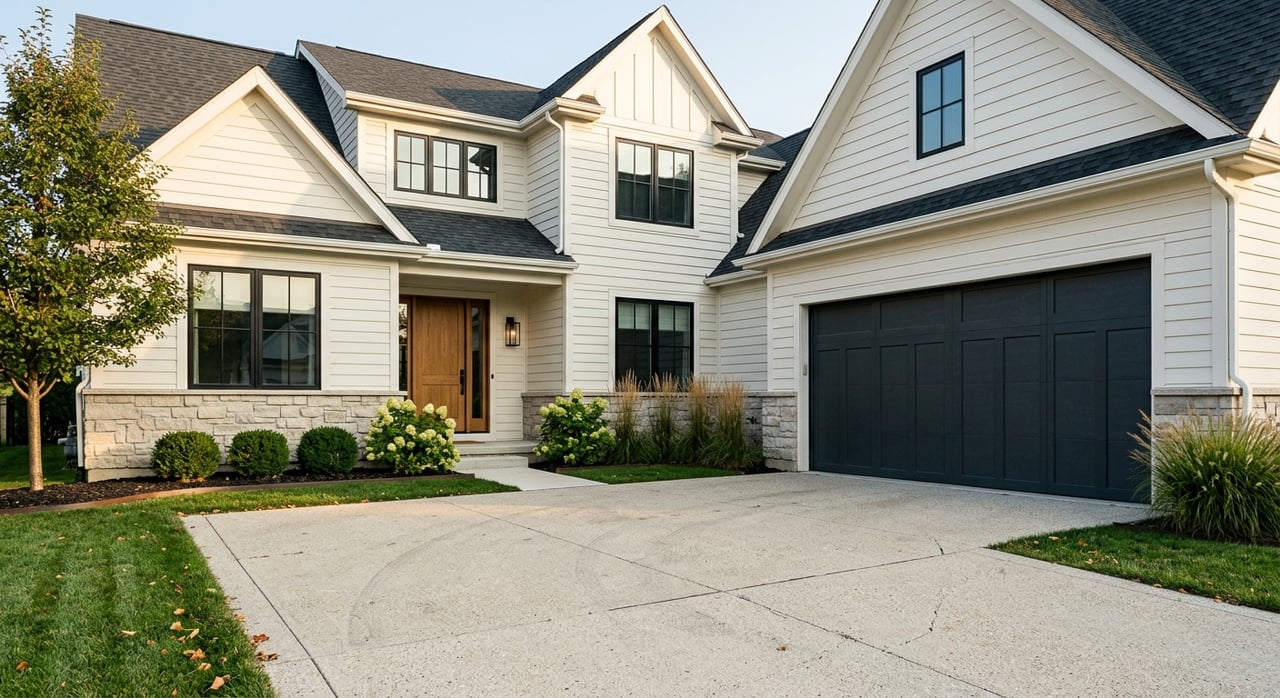
Single-family homes are the most common investment product in Plainfield. They also tend to command the highest rents in local rental guides, which can make them attractive for long-term holds.
That said, they usually come with more maintenance responsibility. Turnovers can be more hands-on, and repair costs can be higher than with smaller attached units.
Townhomes and attached units
Townhomes can offer a useful middle ground for small investors. They may provide solid rental appeal while reducing some exterior maintenance compared with a detached house, depending on the setup and governing documents.
In Plainfield, this category is meaningful enough to deserve a close look. For investors who want suburban rental demand without the full workload of a single-family property, townhomes can be worth comparing carefully.
Condos and small multifamily
Condos and small multifamily properties are a smaller part of Plainfield’s housing stock. That means you may have fewer options, but sometimes that also creates openings for investors who are patient and selective.
If you go this route, underwriting becomes even more important. Limited inventory means you should look closely at rent comps, carrying costs, and the practical realities of turnover and maintenance.
What rents look like in Plainfield
One of the most important things to understand is that there is no single official rent number for Plainfield. Different sources use different methods, property mixes, and timing, so you should treat rental data as a range rather than a fixed answer.
Current benchmarks show that median gross rent in Plainfield is $2,119 according to Census QuickFacts. Other sources put average apartment rent at $1,903 or $2,225, while Zillow reports an overall rental average of $3,000 across property types and bedroom counts.
The spread gets even wider when you break it down by product type. Apartments.com shows average apartment rent at $1,903, average townhome rent at $2,863, and average house rent at $3,378.
For a small investor, the takeaway is simple: underwrite the actual property, not the headline average. A single-family home in Plainfield should not be evaluated the same way as a condo or apartment-style unit.
Vacancy and demand: promising, but not automatic
Point2Homes reports a 2.6% rental vacancy rate in Plainfield. On paper, that suggests a relatively tight rental market.
Still, it would be a mistake to assume every listing will lease quickly. Plainfield has a smaller renter base than owner-occupied base, and the local renter pool is heavily family-oriented, so property type, layout, and monthly payment all matter.
The renter profile also offers useful clues. Point2Homes reports that 55% of rentals are family households, and the median renter move-in year is 2017. That can point to decent occupancy stability for the right home, especially when the property matches what local renters are actually looking for.
How to underwrite a Plainfield rental
If you are a small investor, conservative underwriting matters more here than flashy pro formas. A market with strong rents can still disappoint if you buy the wrong product or overestimate speed to lease.
Focus on a few basics before you buy:
- Compare rent comps by property type, not just by ZIP code
- Build in vacancy instead of assuming immediate occupancy
- Budget for repairs, especially on single-family homes
- Plan for turnover costs and leasing time
- Verify local compliance requirements before closing
A realistic deal in Plainfield usually looks better over the long term than a deal that only works if everything goes perfectly in month one.
Local rules landlords should know
Village code and maintenance standards
The Village of Plainfield says it uses the 2021 International Building Code, 2021 International Residential Code, 2021 International Property Maintenance Code, 2021 International Fire Code, and the 2014 Illinois Plumbing Code. The village also notes that its online municipal code is informational and updated three times per year, so investors should verify requirements directly before relying on them.
For day-to-day ownership, code enforcement matters just as much as the building code itself. The village cites issues such as high weeds and grass, garbage, building exteriors, parking on grass or dirt, stagnant water, hoarding, and unsafe living conditions.
For small landlords, this means your property management system cannot be casual. Routine inspections, clear maintenance standards, and fast follow-up on exterior issues can help you avoid expensive headaches.
Illinois lease and notice rules
Illinois law sets several important landlord-tenant timelines. The Illinois Attorney General says a written lease is recommended, month-to-month tenancies generally require 30 days’ notice to terminate, and year-to-year tenancies generally require 60 days’ notice.
For enforcement, nonpayment evictions generally begin with a 5-day notice, while lease-violation evictions generally use a 10-day notice. Illinois also does not have rent control.
These rules are important because timing mistakes can slow down the process and create unnecessary risk. Even if you own only one rental, it pays to operate like a professional.
Security deposit compliance
Security deposits are one of the biggest compliance areas for small landlords. Under Illinois law, a lessor must provide an itemized damage statement and receipts within 30 days after the tenant moves out, or return the deposit in full within 45 days if that is not done.
Interest on security deposits is required only for lessors with 25 or more units in a single building or contiguous complex. That means most small investors in Plainfield will be more focused on documentation, deadlines, and proper return procedures.
This is not an area to handle loosely. Keeping clean records and a repeatable move-out process can protect both your timeline and your bottom line.
Self-manage or hire a property manager?
When self-management can work
Self-management can make sense if you live nearby and own one or a few units. It is often most workable when you already have systems for screening, lease paperwork, inspections, maintenance coordination, and deposit handling.
In Plainfield, that system matters because village maintenance standards are actively enforced and Illinois law includes specific notice and deposit deadlines. If you are organized and available, self-management may be a practical option.
When management support adds value
Hiring a property manager can become more appealing if you live out of the area, own multiple rentals, or simply do not want to handle day-to-day operations. It can also help if you want support with tenant placement, repair coordination, or code-compliance follow-up.
That is especially relevant in a market like Plainfield, where rental inventory often consists of single-family homes and townhomes rather than large apartment buildings. Each vacancy and turnover can require more hands-on oversight than many first-time investors expect.
For some owners, the best return is not just about gross rent. It is about keeping the property occupied, compliant, and professionally managed over time.
A smart Plainfield investment approach
Plainfield can make sense as a long-term suburban rental hold, especially if you buy with discipline. The market offers strong income fundamentals, solid rent potential in the right property categories, and a renter base that can support steady occupancy.
But this is not a market where you should rely on broad averages alone. The smartest small investors look at local comps, match the product to actual rental demand, and stay realistic about maintenance, compliance, and turnover.
If you want to invest in Plainfield without learning every lesson the hard way, experienced local guidance can make a big difference. Whether you need help buying, leasing, tenant placement, or ongoing property management, Sarah Diana offers hands-on support for small investors across Plainfield and the surrounding suburbs.
FAQs
What makes Plainfield attractive for rental property investors?
- Plainfield offers strong household income, a suburban housing base dominated by single-family homes, and rental rates that can support long-term holds when you buy the right property type.
What is the typical rent range for Plainfield rentals?
- Rent varies by source and property type, with reported benchmarks ranging from about $1,903 for average apartments to about $3,378 for average houses, so local comps are essential.
Is Plainfield a low-vacancy rental market?
- Point2Homes reports a 2.6% rental vacancy rate, which suggests relatively tight conditions, but leasing speed still depends on the property type, condition, and price point.
Should small investors in Plainfield buy single-family homes or townhomes?
- Single-family homes are the dominant local product and often command higher rents, while townhomes may offer a more manageable maintenance profile for some investors.
What landlord rules matter most in Plainfield, Illinois?
- Small landlords should pay close attention to Village of Plainfield maintenance standards, Illinois notice requirements for lease terminations and evictions, and strict security deposit documentation and return timelines.