
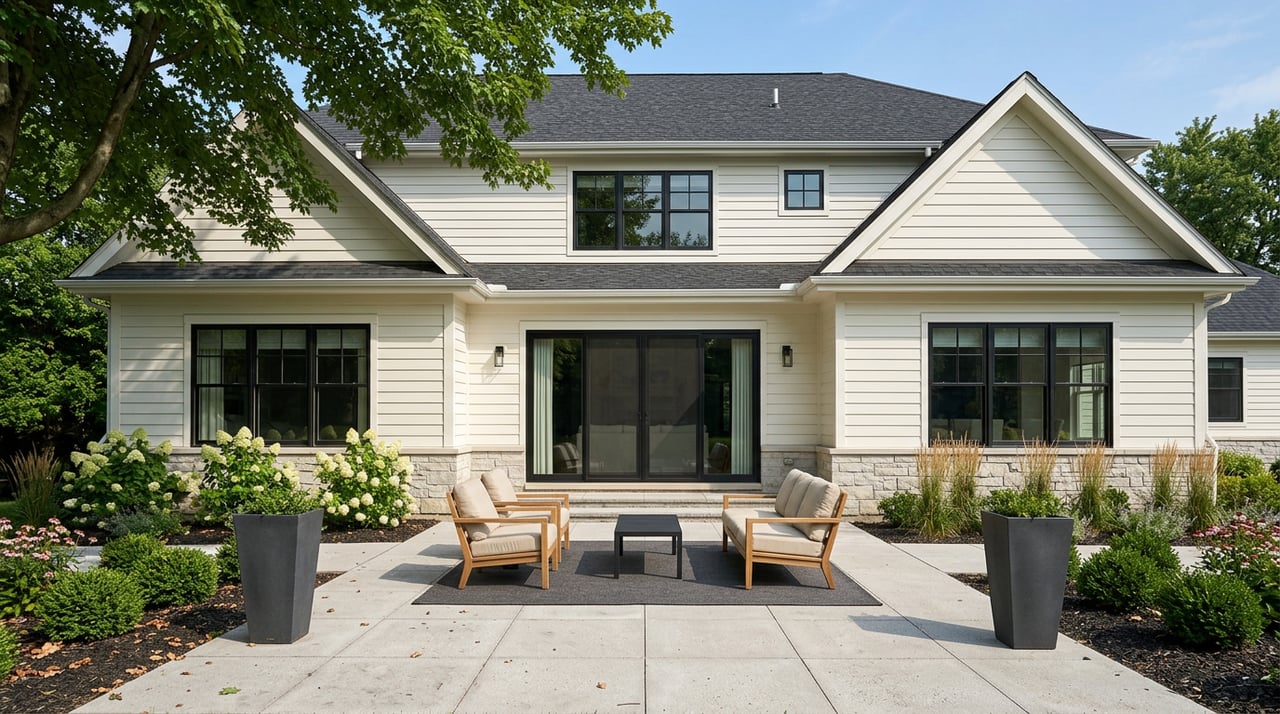
Thinking about moving up in Naperville this spring but not sure how today’s market will treat you? You’re not alone. Many local homeowners are weighing strong equity, shifting mortgage rates, and a segmented market that behaves differently by price band and neighborhood. In this guide, you’ll see where prices and inventory stand, how to time your list-and-buy move, and the most practical ways to finance and negotiate your next home. Let’s dive in.
Naperville market at a glance
Here are four quick metrics that matter for your move-up plan. Figures are recent snapshots and vary by platform methodology, so it helps to view the range.
- Median price: about $607,500 in January 2026 (Redfin). Zillow’s typical value sat in the high $580Ks as of January 31, 2026. Realtor.com reported about $606,450.
- Active listings: a few hundred homes citywide in winter and early spring 2026. Realtor.com showed roughly 194 active listings, while Zillow reported about 202 to 248 depending on the week.
- Market speed: Redfin shows a median 62 to 71 days to sale in January 2026. Realtor.com’s median days on market was closer to 48, reflecting a different timing definition.
- Pricing strength: sale-to-list ratios hover near 99 percent in January 2026, with fewer homes selling above list than the peak periods. Competition still pops in the most desirable pockets.
Nationally, existing-home sales pulled back in January 2026, though affordability improved compared with last year as rates eased a bit. You can see that broader context in the National Association of REALTORS’ report at the time on existing-home sales and affordability. Locally, Naperville continues to outperform many suburbs across DuPage County.
What it means for move-up buyers
Equity and purchasing power
If you’ve owned in Naperville for several years, your equity is likely doing the heavy lifting. A local property data summary shows a large share of Naperville homes with substantial equity, including many with more than 50 percent equity. You can review city-level equity trends in the PropertyFocus Naperville dataset. Equity can fund your down payment, reduce your monthly payment, and help you compete in the mid-range move-up tier.
Rates and your monthly budget
Mortgage rates have trended lower than 2023 highs, but they still sit well above 2020 to 2021 levels. Freddie Mac’s weekly PMMS placed the 30-year fixed average around the high 5s to about 6 percent in late February 2026. You can monitor the latest average on Freddie Mac’s PMMS page. A modest rate move can change your buying power and comfort level, so build scenarios at a couple of rate points when you plan.
Segmented competition by price band
The move-up bracket in Naperville often clusters between about $500K and $750K, depending on home style and neighborhood. That band tends to be more competitive than some luxury niches, given strong family demand and proximity to amenities. With sale-to-list near 99 percent, expect well-priced, updated homes to draw multiple buyers, while unique or higher-end properties may experience a longer market time.
Seasonal timing tradeoffs
Spring is when listings and buyers spike. Listing in March through June can maximize exposure and sale proceeds, which is helpful if you need every dollar for the next purchase. The tradeoff is more competition when you switch to buying. If you prefer more negotiating room on the buy side, late winter sometimes offers it, but with slimmer selection. The NAR’s early 2026 read supports this seasonal pattern of rising activity as rates eased a bit.
Price tiers and neighborhoods to watch
Naperville offers clear tiers that help frame a move-up search. For example, Realtor.com’s neighborhood snapshots showed White Eagle Club at a median around $825K, while University Heights sat closer to $450K in late 2025 to early 2026. These figures move month to month, but they illustrate how your current home’s value translates into the next tier.
Demand in many areas is supported by access to Metra stations and local school districts. To see programs and enrollment details that attract many buyers, review Naperville Community Unit School District 203’s official site. Indian Prairie District 204 also serves portions of the city. Keep in mind that Naperville spans DuPage and Will counties, which can mean different tax rates and closing procedures. You can confirm the city’s county split and civic details on the Naperville overview.
Choose your move-up path
There is no single right way to move up. Pick the approach that matches your finances, your timeline, and the segment you want to buy into.
Scenario A: Sell first, then buy
Best when: you need a clear, final proceeds number before you make the next offer, or carrying two mortgages would be risky.
Pros
- Certainty on budget and down payment.
- Stronger buyer position with no home-sale contingency.
- Easier loan qualification with only one mortgage.
Cons
- You may need temporary housing or a rent-back.
- You must time closings and moves carefully.
How to do it
- Prep and list your current home. Target 30 to 60 days to secure a contract in many price bands, then 30 to 45 days to close.
- Negotiate a short rent-back if you want to shop after you close.
- When you are under contract or closed, make offers with confidence and cleaner terms.
For a practical overview of buying while selling, review this HomeLight guide to coordinating both sides.
Scenario B: Buy first using your equity
Best when: you want to avoid moving twice or fear missing the right home if you wait.
How people do it
- Bridge loan. A short-term loan secured by your current home to unlock equity for the next down payment.
- HELOC or home equity loan. Access a portion of your equity at generally lower cost than a bridge loan.
- Buy-before-you-sell programs. Services that help you present a non-contingent or cash-like offer, often for a fee.
Pros
- Shop and secure your next home without pressure to rush your sale.
- Make stronger, non-contingent offers in competitive segments.
Cons
- Higher short-term costs or variable interest on bridge loans and HELOCs.
- You must qualify carrying more than one payment, at least temporarily.
- Program fees can reduce net proceeds on the sale.
Know the costs and risks
- Bridge loans usually carry higher rates and fees. Get familiar with typical costs using this consumer explainer on bridge loan rates and fees.
- HELOCs can be flexible for down payments, but they add to your debt-to-income and may require seasoning of funds. See Bankrate’s guide to using home equity for a second home.
Scenario C: Make a contingent offer
Best when: the target segment is more balanced or the seller is motivated.
How it works
- Your purchase contract includes a home-sale contingency with a clear timeline.
- Many sellers add a kick-out clause, which lets them continue to market the home. If they get another acceptable offer, you must remove your contingency within a set period or release the home back to the market. Read more about cancellation and kick-out concepts in this overview of real estate contract exits.
Ways to strengthen a contingent offer
- Start your listing work early and show proof of progress or an accepted contract.
- Get pre-underwritten for your loan so your financing looks as close to clear-to-close as possible.
- Offer a reasonable earnest money amount and a short contingency window.
- Consider an escalation clause or a limited appraisal gap only after discussing risks and caps with your agent and lender.
Smart financing tools in plain English
Bridge loan
- What it is: A short-term loan secured by your current home that covers the next down payment until your sale closes.
- Why it helps: Removes a sale contingency and can prevent moving twice.
- Watch outs: Higher interest and origination fees. Plan your exit and what happens if your home takes longer to sell. Learn typical costs here: bridge loan rates and fees explained.
HELOC or home equity loan
- What it is: A line of credit or fixed loan that taps your home equity.
- Why it helps: Often lower cost than a bridge loan and can be drawn as needed.
- Watch outs: Variable rates, effects on debt-to-income, and possible seasoning rules. See Bankrate’s consumer guide on using equity to buy.
Buy-before-you-sell programs
- What it is: Services that help you write a cash-like or non-contingent offer and then list your current home.
- Why it helps: Stronger offer terms in competitive tiers and less pressure on your sale timeline.
- Watch outs: Program fees and rules vary. Review a HomeLight overview of buy-before-you-sell options.
Make your offer stand out
Key contingencies defined
- Inspection contingency. A short window to inspect and request repairs or credits.
- Financing contingency. Protects you if your loan is not approved by a deadline.
- Appraisal contingency. Protects you if the lender’s appraisal comes in below the contract price.
- Home-sale contingency. Your purchase depends on selling your current home by a deadline.
Work with your agent and, when appropriate, your attorney to tailor these to your comfort with risk and the heat of the submarket you are targeting.
Tactics that work in Naperville
- Get pre-underwritten. Full file underwriting signals strength in competitive price bands.
- Use an escalation clause thoughtfully. Set a clear cap and request proof of competing terms.
- Consider a limited appraisal gap. Only agree to cover a shortfall you can comfortably fund.
- Offer flexible possession. A short rent-back can win a tie without raising price.
Sample timelines you can copy
Every move is unique, but these examples show typical pacing. Closing times often run 30 to 45 days after contract, which aligns with this step-by-step closing timeline.
Timeline A: Sell first, then buy
- Weeks 1 to 3: Prep, price, and launch your listing.
- Weeks 4 to 8: Negotiate offers and go under contract. Target buyer financing milestones and inspection.
- Weeks 9 to 14: Close on your sale. If needed, secure a short rent-back.
- Weeks 10 to 18: Shop actively once you know final proceeds. Make offers with no sale contingency and close in 30 to 45 days.
Timeline B: Buy first with HELOC or bridge loan
- Weeks 1 to 2: Get pre-underwritten and confirm HELOC or bridge loan capacity.
- Weeks 3 to 6: Tour target neighborhoods and lock your next home under contract with non-contingent terms.
- Weeks 7 to 12: Close on the purchase in about 30 to 45 days. Move and stage your current home.
- Weeks 8 to 16: List your current home and sell. Use proceeds to pay down or close the HELOC or bridge loan.
Your next steps
If you plan to trade up in Naperville this spring, start by clarifying your equity, target price band, and financing comfort at a couple of rate scenarios. Then choose the path that best fits your risk tolerance and timeline. A seasoned local advisor can help you time your list-and-buy sequence, structure a financing plan, and write a competitive offer that still feels safe.
Ready to map your move-up strategy around your exact home and budget? Schedule a Free Consultation with Sarah Diana to get a personalized plan and a clear path forward.
FAQs
Is now a good time to move up in Naperville?
- Prices are holding near about $600K and sale-to-list ratios sit around 99 percent, inventory is a few hundred homes, and rates are near 6 percent, so it can be a good time if you leverage your equity and match your strategy to your target segment.
How much equity do I need for a move-up purchase?
- Many Naperville owners have strong equity and a 20 percent down payment is common but not required, so the right amount depends on your monthly budget and whether you want to avoid mortgage insurance or cover an appraisal gap.
Should I buy first or sell first in Naperville?
- If you need certainty on proceeds or want simpler financing, sell first; if you want to avoid moving twice and can handle short-term carrying costs, consider buying first with a bridge loan or HELOC and plan your exit strategy.
How do school districts influence home searches locally?
- Many buyers consider proximity to programs and transportation, and districts like 203 and 204 often shape search areas, so use district maps and official resources to confirm boundaries without making assumptions.
Will I need to waive contingencies to win?
- Not always, since the market varies by price band, so aim for pre-underwriting, flexible possession, and targeted terms first, then consider limited appraisal or escalation structures only if needed and within a comfort cap.